


Tripadvisor: Plan & Book Trips
Tripadvisor
I use Tripadvisor: Plan & Book Trips as a research companion rather than as a complete travel command center. That distinction matters. The app is free, available for Everyone, and built by Tripadvisor, so it is easy to recommend as a first stop when I am deciding where to stay, what to do, or which places deserve space in an itinerary. Its real strength is the amount of traveler feedback gathered around destinations and businesses, while its main weakness is that research, booking, and personal trip organization do not always feel like one perfectly connected process.
For someone planning a weekend away, that combination can still be extremely useful. I can begin with a broad idea, compare hotels or tours, read recent opinions, and gradually turn vague plans into a shortlist. I would not rely on it alone for every practical travel task, especially when I need the most precise transport information or a single place to manage every reservation. But for judging the quality and popularity of travel options before spending money, it remains one of the more recognizable choices in the Travel & Local category.
What the app does best when I am researching a trip
The most valuable part of the experience is the way Tripadvisor puts different kinds of travel decisions beside one another. Instead of treating accommodation, restaurants, attractions, and tours as separate worlds, I can explore them around the same destination. That makes the app particularly helpful during the early planning stage, when I am still asking basic questions such as whether an area looks convenient, whether an attraction seems worth the time, or whether a hotel fits the style of trip I have in mind.
I find traveler reviews more useful when I read them as a collection rather than accepting one enthusiastic or angry comment as the truth. A hotel with many opinions gives me a chance to notice recurring themes: noise, location, cleanliness, service, or the difference between photographs and the actual experience. The app’s audience is large enough that the review section often becomes a form of practical research. It is not a substitute for my own judgement, but it can reveal questions I would not have thought to ask.
That scale is reflected in its average rating of 4.5 and roughly 1.5 million ratings. Tripadvisor has also passed 100 million installs, which helps explain why I often find a substantial body of traveler feedback for well-known destinations. I treat those figures as a sign of reach, not as proof that every recommendation is right for me. Popularity can make research easier, but it can also draw attention toward famous places instead of quieter alternatives.
Related News

Why WhatsApp Messenger Still Makes Everyday Communication Feel Easy

Jurassic World: The Game Is the Better Dino Tycoon for Strategic Players

Threads in Real Life: Who Should Join, Lurk, or Leave

How SHEIN Turned Shopping Into an Endless Content Feed

How to Make Fortnite Feel Smarter on Mobile

Should You Switch to Microsoft Outlook on Mobile?
One useful habit is to read reviews by travel context. A family may care about room layout and nearby food, while a solo traveler may focus on walkability and evening atmosphere. A couple planning a short break may value convenience more than a long list of facilities. I look for comments from people whose priorities resemble mine, then compare those comments with less favorable experiences. This produces a much more reliable picture than simply choosing the highest-ranked result.
The app is also helpful when I am building a shortlist instead of making an instant decision. I can compare several possibilities, return to the destination later, and use the information to narrow down the options. That slower approach is important because travel choices often involve trade-offs. The best-rated hotel may be farther from the places I want to visit. A popular tour may have a schedule that wastes part of the day. A restaurant with impressive reviews may not suit my budget or dietary needs.
How I use it during a realistic weekend plan
Imagine I am planning a two-night city break. I start by checking the destination’s hotels and attractions, not because I expect the app to create the perfect itinerary automatically, but because I want to understand the shape of the trip. If several attractions are concentrated in one area, I can look for accommodation nearby. If a highly discussed experience requires a large part of the day, I can decide whether it deserves priority before making other plans.
Gallery
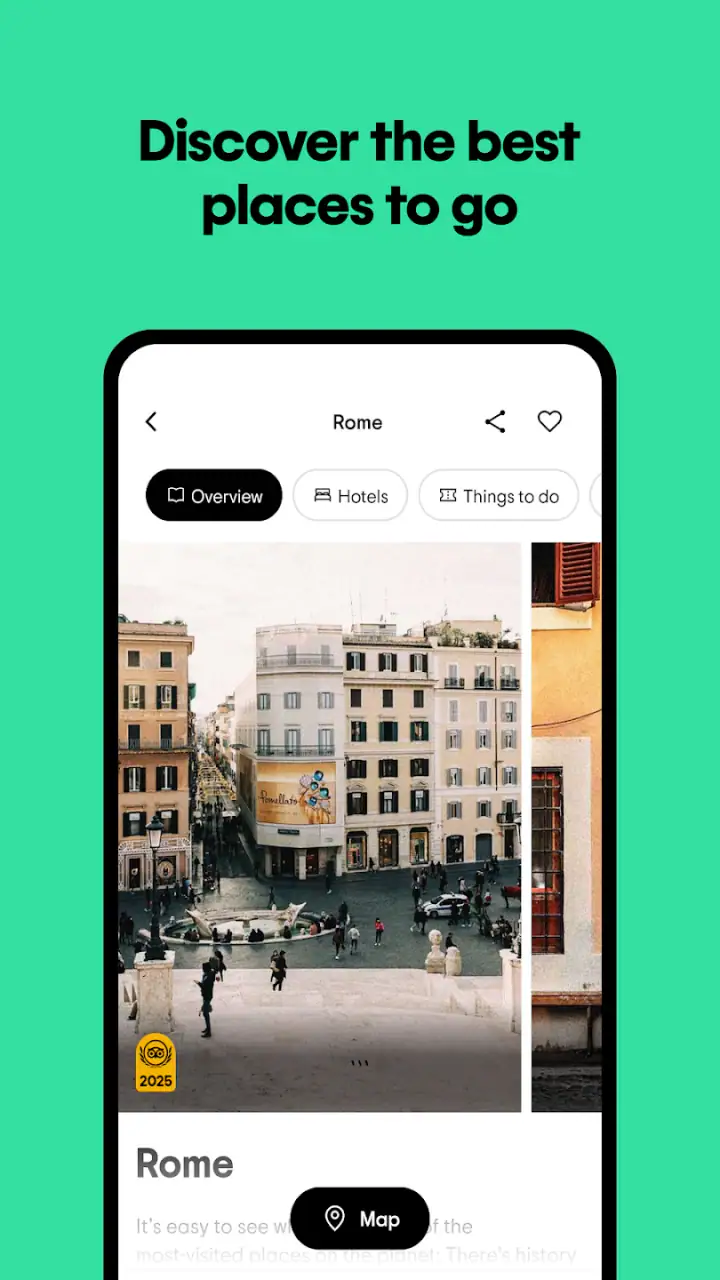
Next, I read the newest useful reviews rather than stopping at the overall ranking. I pay attention to comments that mention timing, access, queues, neighborhood feel, or what happens outside the ideal conditions shown in promotional images. Then I compare the choices with the kind of trip I actually want. This workflow turns Tripadvisor into a decision filter: it helps me remove unsuitable options before I spend time booking them elsewhere.
The rewards angle may also appeal to travelers who make frequent reservations through the app. The store summary presents rewards connected with hotels, tours, and travel generally, so I see that as an extra reason to keep the app in my planning routine. I would still compare the final booking terms and total cost before committing. A reward is only valuable if the underlying option has the right location, cancellation conditions, and schedule for my needs.
That is one of the less obvious trade-offs here: a convenient reward can encourage me to stay inside one travel ecosystem, while the best deal or most suitable policy may be found through a hotel’s own service, a specialist booking platform, or a local operator. I use rewards as a tiebreaker, not as the first reason to choose a trip component.
Why the review system requires careful reading
Reviews are the app’s greatest asset, but they are also where I need to slow down. A score compresses many different experiences into one impression. It cannot tell me whether a place is good for my particular dates, mobility needs, travel style, or tolerance for crowds. I therefore look for patterns and details instead of treating the ranking as a verdict.
A practical technique is to read a few positive reviews, a few critical ones, and then the middle-ground comments. The positive entries show what the business does well; the negative entries expose possible deal-breakers; the moderate reviews often explain who will enjoy the place and who will not. I also check whether comments appear relevant to the current experience, because older impressions may not reflect a recent change in management, facilities, or surroundings.
I would not use a single review to accuse a business of poor service, nor would I assume a glowing description guarantees a smooth visit. Travel is personal, and expectations differ sharply. The app is best when it gives me enough viewpoints to make an informed choice, not when it tries to make the choice for me.
Where the experience becomes less convincing
My biggest reservation is that Tripadvisor can feel stronger as a discovery and comparison tool than as a fully unified trip manager. I may use it to research a hotel, inspect activities, and read restaurant opinions, but that does not automatically mean every practical detail of the journey is handled in one clear workflow. For flights, detailed public transport planning, live disruption information, or a complete reservation wallet, I would normally turn to more specialized apps.
This matters because travelers often move between several services anyway. I may discover a property in Tripadvisor, compare its offer with another source, check a map separately, and then manage confirmation messages in a booking service or email. The app can reduce uncertainty at the research stage, but it does not eliminate the need for that second layer of organization.
There is also a risk of over-planning. Because the app presents so many opinions and possibilities, I can spend too long comparing attractions that are not genuinely different for my trip. A destination can start to look like a list of rankings instead of a place I am visiting. I get better results when I decide my priorities first—location, food, culture, rest, family time, or adventure—and use the app to test those priorities against real traveler experiences.
Another limitation is that popularity does not equal local authenticity. Highly visible businesses naturally attract more attention, while a small place with fewer reviews may be overlooked. I use the app to identify dependable options, but I do not let its most prominent results define the entire destination. Asking local contacts, checking neighborhood sources, and walking beyond the busiest areas can add context that a large review platform cannot provide on its own.
The booking stage deserves the same caution. Before I confirm anything, I read the complete terms shown for the offer, including the dates, inclusions, cancellation rules, and any conditions that affect the final cost. I also save confirmation details somewhere I can reach without searching through the entire app. That habit is useful because a travel research platform is not the same thing as an emergency support channel or an offline document folder.
On older phones, compatibility may also influence the decision. The current version is 67.1 and the app requires Android 7.0 or later. For most supported devices that should be a straightforward starting point, but anyone using an older Android phone should check compatibility before planning around it. I would not want to discover that limitation after arriving somewhere and needing access to saved travel information.
Who will get the most from it
I think the app suits travelers who enjoy comparing options and want a broad sense of what other visitors experienced. It is particularly useful for first-time visitors to a destination, people choosing between several hotels, and travelers who want tours or attractions considered alongside accommodation. It also works well for someone who prefers to research gradually: a little browsing today, a shortlist tomorrow, and a booking decision once the overall plan feels coherent.
It can be valuable for families too, provided the adult planning the trip reads beyond the headline score. Family suitability depends on details such as distance, timing, facilities, and the likely pace of the day. Reviews can help identify those practical concerns, but I still verify the information directly before booking anything that affects children, accessibility, or a fixed schedule.
Frequent travelers may appreciate the rewards element, especially if they already use Tripadvisor to compare hotels and tours. The benefit is greatest when it fits naturally into an existing planning habit. I would not recommend changing a well-organized booking routine solely to chase rewards, particularly if another service offers clearer management or better conditions for a specific reservation.
On the other hand, I would suggest skipping it as a primary tool if the main need is turn-by-turn navigation, public transport updates, flight management, or a single offline itinerary. A maps app is usually better for getting from one place to another. A dedicated booking service may be better for managing confirmations and changes. A specialist activity provider may offer more technical detail for a particular type of excursion. Tripadvisor is strongest before and during the decision, not necessarily for every operational detail afterward.
Travelers who dislike review-heavy decisions may also find it tiring. The app gives me plenty to consider, but that abundance can create indecision. My solution is to define two or three non-negotiables, reject anything that fails them, and then compare only the remaining choices. This keeps the research useful rather than turning it into endless scrolling.
Small habits that make the app more useful
My first tip is to search with a purpose. Instead of browsing a destination without a plan, I ask a specific question: where should I stay for walkability, which activity fits a short visit, or which restaurants are practical near a chosen attraction? Focused searches produce more useful comparisons and reduce the temptation to follow every popular result.
My second tip is to separate discovery from confirmation. I use Tripadvisor to find possibilities and understand common experiences, then I verify important details at the point of booking. This is especially sensible for opening times, meeting points, inclusions, and policies that could affect a tightly scheduled day. It prevents a promising review from becoming an avoidable travel problem.
My third tip is to build around geography rather than rankings. After identifying the places I care about, I group them by area and think about the time between them. A slightly lower-ranked option near several priorities may be a better choice than a famous one that requires repeated long journeys. The app helps me discover the options, but I make the final plan according to distance and energy.
My fourth tip is to use criticism constructively. If several travelers mention the same inconvenience, I do not automatically reject the place. I ask whether that inconvenience matters to me. A busy location may be a problem for someone seeking quiet but an advantage for someone who wants nightlife. A long walking route may be fine for one traveler and impossible for another. The useful question is not “Is this place good?” but “Is this place good for my trip?”
My verdict after using it for travel decisions
Tripadvisor: Plan & Book Trips earns its place on my phone because it helps turn uncertain travel ideas into informed shortlists. Its broad mix of hotels, tours, attractions, and traveler opinions is more useful than relying on a single booking page, particularly when I am unfamiliar with a destination. The large community behind the app gives its research depth, while the free price makes it easy to try without committing money upfront.
Still, I would not describe it as the only travel app I need. Its reviews require interpretation, its popular results can dominate the conversation, and the complete journey may still involve maps, booking services, direct confirmation, and a separate place for essential documents. The rewards feature is a pleasant incentive, but it should not override location, value, flexibility, or suitability.
The app was released on July 12, 2010, and its long presence in travel is easy to understand: it answers the question many travelers ask before booking anything—what have other people actually experienced here? With an Everyone age rating, a free download, and a current version of 67.1, it is approachable for a wide audience, as long as the device meets the Android requirement.
My recommendation is clear: use Tripadvisor as a thoughtful research partner, not as an unquestioned travel authority. If you enjoy comparing choices, reading real-world impressions, and finding hotels or activities that fit a particular destination, it can save time and prevent avoidable mistakes. If you mainly need navigation, live transport information, or flawless reservation management, pair it with more specialized tools. Used with that expectation, it is a genuinely helpful part of trip planning rather than a replacement for every other travel service.
FAQs for Tripadvisor: Plan & Book Trips
What features does the Tripadvisor app offer for planning trips?
The Tripadvisor app provides a comprehensive suite of features for planning your trips, including access to millions of reviews for hotels, restaurants, and attractions worldwide. Users can explore travel guides, book accommodations, and find the best dining spots. Additionally, the app offers a map-based search and personalized recommendations based on your preferences.
Is the Tripadvisor app free to use?
Yes, the Tripadvisor app is free to download and use. However, while browsing and reading reviews is free, booking certain accommodations or tours may involve additional costs. The app often offers exclusive deals and discounts, but it’s essential to verify any costs associated with bookings through third-party links.
Can I use the Tripadvisor app offline?
The Tripadvisor app offers limited offline capabilities, such as accessing saved lists and viewing downloaded maps, which can be especially useful when traveling without internet access. However, for real-time updates and additional features like live reviews and booking confirmations, an internet connection is required.
How reliable are the reviews on Tripadvisor?
Tripadvisor is renowned for its extensive database of user-generated reviews. While most reviews are authentic and provide valuable insights, it’s important to read multiple reviews to get a balanced perspective. Tripadvisor has measures in place to detect and remove fake reviews, but users should still exercise judgment when reading them.
Can I make bookings directly through the Tripadvisor app?
Yes, the Tripadvisor app allows users to book hotels, flights, and restaurants directly. It partners with various booking platforms to provide seamless booking experiences. However, it’s advisable to confirm booking details and cancellation policies directly with the service provider to ensure everything is in order.
Pros
- Comprehensive travel guides for global destinations.
- User reviews provide real traveler insights.
- Easy hotel and restaurant booking options.
- Customizable trip itineraries for planning.
- Offline access to saved maps and guides.
Cons
- App may consume significant battery life.
- Some features require an internet connection.
- Occasional ads can disrupt user experience.
- User interface can seem cluttered at times.
- Limited support for certain remote areas.


